
In recent years, the global energy landscape has undergone a radical transformation. Growing awareness of climate change issues and the need to reduce dependence on fossil fuels have driven governments, businesses, and citizens to invest heavily in renewable energy. Among these, solar energy has emerged as one of the most promising solutions, leading to an exponential increase in the demand for solar panels.
Solar panels represent a key technology for transitioning to a sustainable economy. Numerous governments’ incentives and increasing price competitiveness support their widespread adoption. However, the rapid expansion of this market has highlighted new logistical challenges. Handling solar panels requires specific expertise due to their unique characteristics: large size, high economic value, and inherent fragility, which traditional logistics solutions do not possess. To meet the increasing demand, new specialized services were developed to offer better solutions for the handling, storage, and distribution of these fragile products.
To maintain a competitive edge, solar panel producers are turning to third-party logistics (3PL) providers to manage the operational complexity associated with solar panel logistics and to benefit from a range of additional services that cover the entire product lifecycle.
In this context, PLogistics stands out as a key partner, offering advanced and customized logistics solutions for the solar panel sector. With a focus on quality and sustainability, PLogistics supports companies in achieving their operational and ecological goals, contributing to the construction of a greener and more sustainable future.
One of the fundamental aspects of solar panel logistics is the unloading process. PLogistics provides highly specialized services for this phase, using appropriate equipment and qualified technicians for heavy load lifting. Panels are carefully unloaded from trucks or containers to ensure their integrity during transport and subsequent storage.
Solar panels are stored safely and efficiently. Pallets containing the panels are placed on flat ground or on racks, up to a maximum of two pallets, to ensure compliance with current regulations. This storage method not only optimizes the available space but also protects the panels from potential damage.
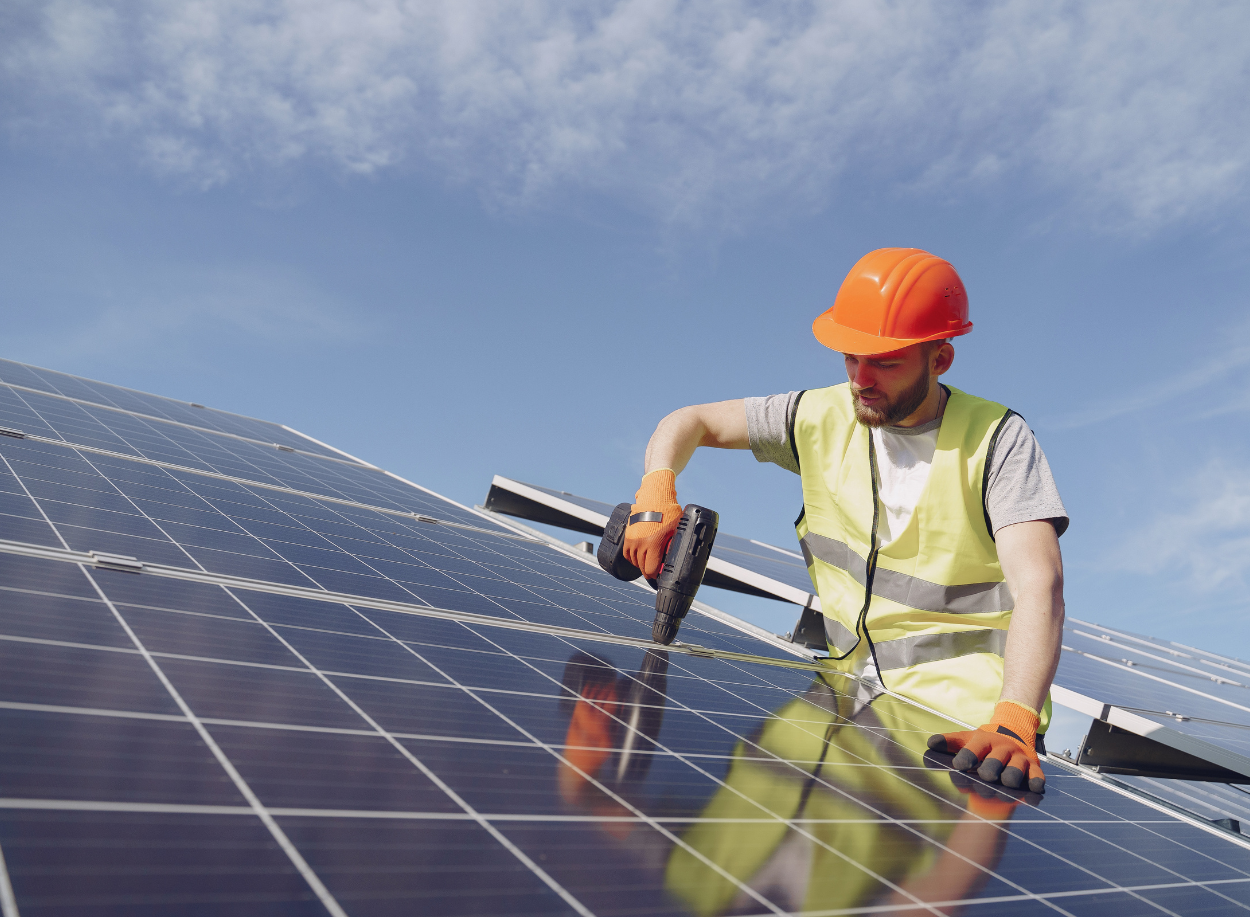
Solar panel logistics do not stop at the warehouse. PLogistics also ensures the safe and timely transport of panels to installation sites. Using appropriate transport means for oversized pallets, the panels are delivered and unloaded with forklifts or cranes directly at the installation location, facilitating the work of installers and reducing waiting times.
Quality control is a crucial phase in the management of solar panels. PLogistics has extensive areas dedicated to this activity within its warehouses. Here, panels undergo specific tests to verify their functionality and compliance with quality standards. This process ensures that only perfectly functioning products reach the end customers.
PLogistics offers a comprehensive service for managing spare parts and returns of solar panels. This includes:
This integrated approach ensures efficient and sustainable after-sales service, helping to maintain high levels of customer satisfaction and reducing environmental impact.
In a world increasingly oriented towards sustainability, solar panel logistics represent a crucial challenge. PLogistics addresses this challenge by offering customized and innovative solutions, ensuring the integrity of panels throughout the entire logistics process, from unloading to storage, delivery, and spare parts management.
Want to know more?
Send and email to marketing@plogistics.it
Subscribe now to keep reading and get access to the full archive.
Scrivici a info@plogistics.it